




How to Set Up a Jobsite Hydration Station for OSHA Heat Safety
OSHA’s message on heat has not changed: Water. Rest. Shade. Texas does not have its own state heat standard — federal OSHA covers most private employers here — but the agency is actively inspecting outdoor and indoor heat hazards under its National Emphasis Program. A hydration station that is close, stocked, and actually cold is one of the first things a competent person or an inspector will look for.
This is the practical setup we see work on Permian construction sites and oilfield locations. It is not legal advice. It is how you turn the guidance into something a crew will use at 2 p.m. in August. For policy language, also read our OSHA hydration requirements for Texas employers and Texas heat illness prevention guide.
What OSHA Guidance Expects You to Provide
From OSHA’s Water. Rest. Shade. materials and related heat guidance:
- Cool potable water close to the work, in enough quantity for the shift. Workers should be able to drink about 1 cup every 15–20 minutes during heavy work in the heat (about one quart per hour).
- Electrolytes for jobs lasting more than two hours. Water alone does not replace sodium and potassium lost in sweat.
- Shade or a cooled rest area that is not just “a truck with the A/C maybe on.”
- Encouraged rest — not a culture that punishes people for stopping to drink.
A proposed federal heat rule has discussed triggers around an 80°F heat index (water, shade, cooling) and higher-heat rest and monitoring requirements. Until any final rule applies to your operation, the General Duty Clause and current OSHA heat guidance still apply. Build the station as if an inspector will walk it this week.
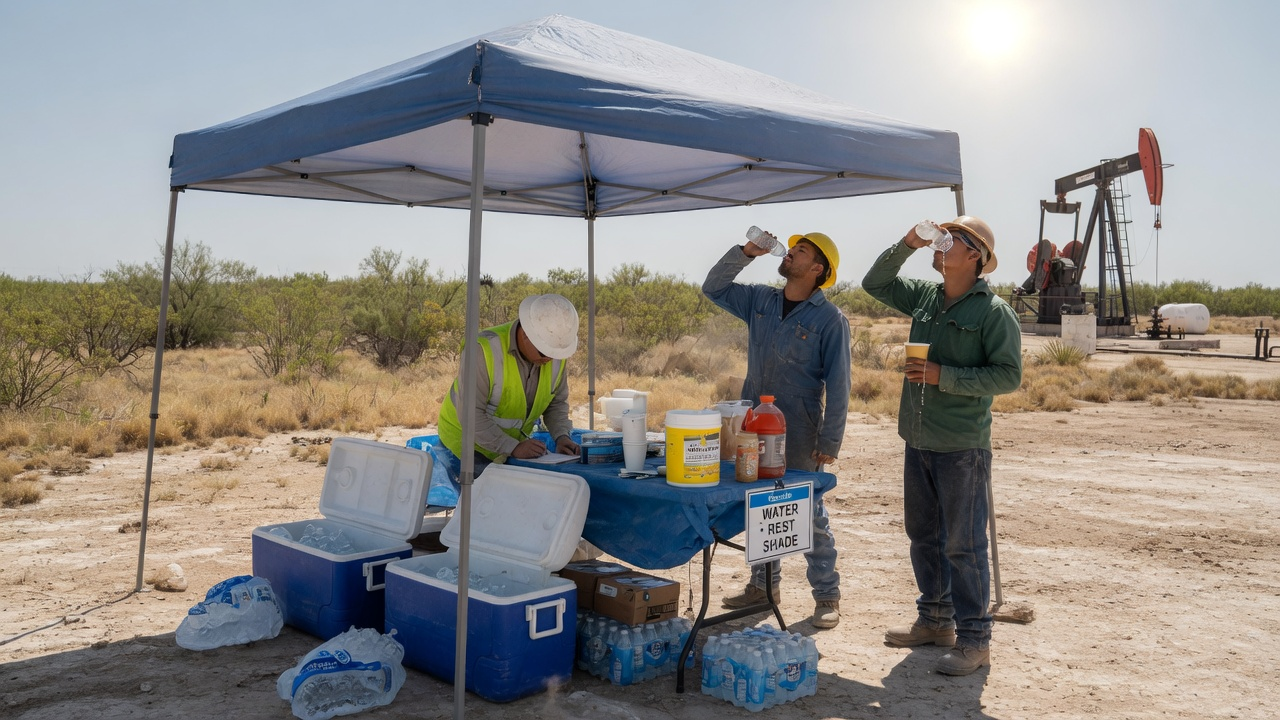
The Station Itself: Five Pieces
- Shade. A pop-up canopy, conex overhang, or dedicated rest trailer. Put it where people already walk, not behind the laydown yard.
- Cool water. Bottled water, 5-gallon jugs on a dispenser, or both. Ice in the cooler is what makes OSHA’s “cool water” real in 110°F air.
- Ice. Bags in a cooler for small crews; an ice merchandiser for anything that runs more than a day. Melted ice is not a hydration program.
- Electrolytes. Sqwincher or Gatorade cooler mix, Qwik Stiks, and freezer pops. See where to buy Sqwincher in bulk.
- Cups, trash, and a responsible person. Someone has to check levels at morning, lunch, and mid-afternoon. An empty station does not count.
Place It Close Enough That People Use It
OSHA is explicit: water should be near the work, familiar, and easy to reach. If the station is a five-minute walk in the sun, hands will skip it. On a spread-out location, use more than one station — a cooler at the far workface plus the main canopy at the trailer.
Do not hide ice in a locked conex that only the foreman can open. If you need to control theft, use a merchandiser with a simple site rule, not a barrier that stops hydration.
Restock Before You Run Out
A working station has a delivery cadence, not a hope:
- Check ice and water at tour start, midday, and before night shift.
- On 100°F+ days, assume usage will jump. Order the buffer the night before.
- Put ice, water, and electrolytes on one vendor so you are not coordinating three trucks through the same gate.
- Keep Fastlane Ice on speed dial for same-day restock when a heat wave or extra hands blow the plan.
For worker-facing habits to post at the station, use hydration tips for outdoor workers and how to keep workers hydrated in 110°F heat.
We Stock the Station. You Run the Job.
Fastlane Ice delivers bagged ice, bottled water, 5-gallon jugs, Gatorade, and Sqwincher, and we rent the merchandiser that keeps it frozen. That is the physical side of Water. Rest. Shade. for crews in Midland, Odessa, Pecos, Carlsbad, Hobbs, and across West Texas and Southeast New Mexico.
Call (432) 288-4407 or request a hydration delivery quote. Tell us crew size and location — we will size ice, water, and electrolytes so the station stays full through the hottest weeks of the year.