





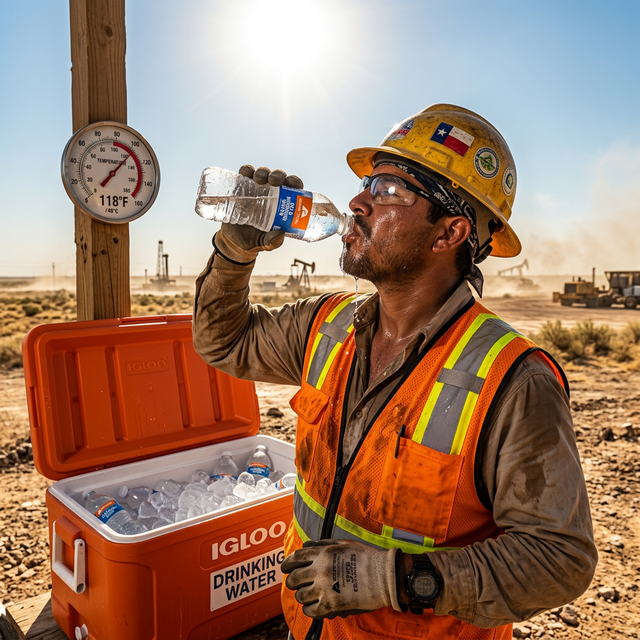
How to Keep Workers Hydrated in 110°F Heat: A Permian Basin Summer Guide
When the thermometer crosses 110°F in the Permian Basin — and it does, regularly, from June through September — hydration stops being a suggestion and becomes a matter of survival. Workers in Midland, Odessa, Pecos, Monahans, Hobbs, and Carlsbad face some of the most extreme working conditions in the United States, and heat-related illness remains one of the leading causes of workplace injuries and deaths in the region.
This guide provides actionable strategies for supervisors, safety managers, and business owners who need to keep their crews safe and productive during the worst of West Texas and Southeast New Mexico summers.
Understanding What 110°F Does to the Human Body
At 110°F, the human body is under extreme stress. Here's what happens physiologically:
- Sweating accelerates dramatically — workers can lose 1–2 liters of sweat per hour during heavy physical labor
- Core body temperature rises — if it exceeds 104°F, heat stroke becomes imminent
- Electrolyte depletion — sodium, potassium, and magnesium are flushed out with sweat, causing cramps and cognitive impairment
- Blood thickens — dehydration reduces blood volume, forcing the heart to work harder and increasing the risk of cardiac events
- Cognitive decline — even mild dehydration (2% body weight loss) reduces concentration, reaction time, and decision-making ability
In an environment where workers operate heavy machinery, climb structures, and handle hazardous materials, cognitive decline from dehydration is as dangerous as the heat itself.
The Hydration Math: How Much Is Enough?
OSHA and the CDC provide clear guidelines, but let's translate those into practical Permian Basin numbers:
- Water: At least 1 quart (32 oz) per worker per hour in temperatures above 100°F. A 20-person crew on a 10-hour shift needs approximately 62 gallons of water per day.
- Ice: Plan for 10–20 lbs of ice per worker per day to keep water cold and for direct cooling. Cold water is consumed more willingly than warm water — this matters.
- Electrolytes: For every 3-4 water breaks, at least one should include an electrolyte drink like Gatorade or Sqwincher.
Most worksites underestimate their needs by 30–50%. It's always better to have surplus than to run out at 2 PM when the heat peaks.
7 Strategies That Actually Work in Extreme Heat
1. Pre-Hydrate Before the Shift Starts
Workers should drink 16–24 oz of water in the hour before their shift begins. Starting the day already hydrated creates a buffer that's critical in extreme conditions. Post reminders at the check-in area and make water available at morning safety meetings.
2. Make Cold Water Unavoidable
Workers won't walk 10 minutes to a water station. Place water coolers and ice chests within 2 minutes of every work area. The closer and colder the water, the more workers drink. Fastlane Ice delivers bulk water and bagged ice directly to your site so you can stock multiple stations without logistics headaches.
3. Enforce a 15/15 Rule
Every 15 minutes, every worker drinks at least 8 oz. This isn't optional — it should be as mandatory as wearing a hard hat. Assign a "hydration monitor" on each crew who calls out water breaks and watches for signs of distress.
4. Rotate Electrolytes Throughout the Day
Water alone won't cut it past the first few hours. Alternate between water and electrolyte drinks — products like Sqwincher and Gatorade are specifically formulated to replace what extreme sweating takes out. Avoid energy drinks and excessive caffeine, which accelerate dehydration.
5. Use Ice for More Than Drinking
Ice doesn't just cool water — it cools people. Provide ice towels (bandannas soaked in ice water) for workers to drape on their necks. Keep extra ice in coolers specifically designated for cooling towels and ice packs. This is especially effective during rest breaks in shade areas.
6. Implement Mandatory Cooling Breaks
When temperatures exceed 110°F, OSHA recommends rest breaks of at least 10 minutes every hour in a shaded or air-conditioned area. Don't leave this to individual workers — build it into the shift schedule so it happens automatically.
7. Never Run Out — Schedule Your Delivery
The single worst thing that can happen is running out of water or ice in the middle of a 110°F afternoon. Fastlane Ice offers scheduled recurring delivery throughout the Permian Basin, ensuring your site is stocked before your crew arrives every morning. We also provide ice merchandiser rentals for sites that need constant supply throughout the day.
Warning Signs Every Supervisor Must Know
Train your supervisors to recognize these escalating signs of heat illness:
- Heat cramps: Muscle spasms in legs, arms, or abdomen — the earliest warning sign
- Heat exhaustion: Heavy sweating, weakness, cold/clammy skin, nausea, fast pulse
- Heat stroke: Body temperature above 104°F, confusion, loss of consciousness, hot/dry skin — this is a medical emergency requiring 911
The gap between heat exhaustion and heat stroke can be as little as 15 minutes. Early intervention with cold water, shade, and ice can save a life.
Keep Your Crew Safe This Summer
Fastlane Ice delivers bagged ice, bulk water, and electrolyte products to worksites across Midland, Odessa, Pecos, Monahans, Big Spring, Carlsbad, Hobbs, and throughout the Permian Basin. Don't wait for a heat casualty to take hydration seriously.
Contact us today to build a summer hydration delivery plan that protects your crew when the heat is at its worst.
â€