





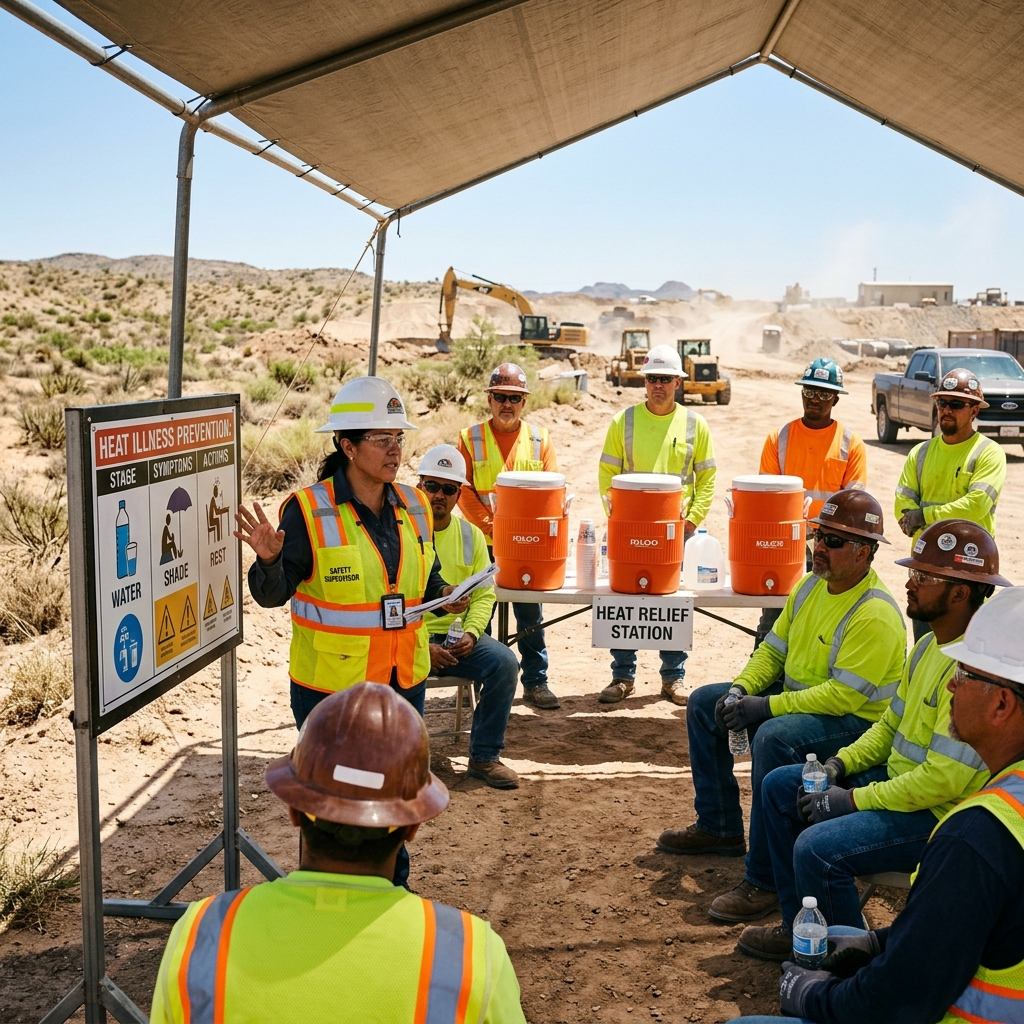
Heat Illness Prevention: A Texas Employer's Guide
Working in West Texas and the Permian Basin means operating in some of the highest heat indices in North America. From May through September, temperatures regularly surpass 100°F with low humidity that accelerates dehydration. For Texas employers in oil & gas, construction, agriculture, and outdoor logistics, implementing a comprehensive Heat Illness Prevention Program is vital for employee safety and legal compliance.
This guide breaks down the core components of a compliant, effective heat illness prevention program tailored specifically for Texas employers.
1. Recognizing the 3 Stages of Heat Illness
Supervisors and workers must be trained to identify symptoms immediately before a condition escalates:
- Heat Cramps: Muscle spasms, heavy sweating, and thirst. Action: Move to shade, drink cold water/electrolytes, rest.
- Heat Exhaustion: Dizziness, headache, nausea, weakness, heavy sweating, elevated heart rate, pale/clammy skin. Action: Move to shade, apply ice towels, sip cold fluids, monitor closely.
- Heat Stroke (Medical Emergency): Confusion, slurred speech, loss of consciousness, hot/dry skin or profuse sweating, seizures. Core body temp over 104°F. Action: Call 911 immediately. Cool worker aggressively with ice bath, ice packs, and wet sheets.
2. The 20% Acclimatization Rule for New & Returning Workers
OSHA statistics show that nearly 70% of heat stroke fatalities occur during a worker's first week on the job. The human body requires 7 to 14 days to gradually adapt to working in high heat (producing less salty sweat, expanding plasma volume, lower heart rate).
Follow the 20% Acclimatization Rule:
- Day 1: 20% of normal shift duration in heat
- Day 2: 40% duration
- Day 3: 60% duration
- Day 4: 80% duration
- Day 5+: 100% duration
Apply this schedule to all new hires and any worker returning from a vacation or medical leave of 3 or more days.
3. Establishing Mandatory Water, Ice, and Rest Schedules
Relying on workers to drink "when thirsty" fails in extreme heat because thirst lags behind physiological dehydration. Implement strict rest & hydration intervals based on the Heat Index:
- Heat Index 90°F - 103°F (Moderate Risk): 10-minute rest break every hour; 1 quart water/hour per worker.
- Heat Index 103°F - 115°F (High Risk): 15-minute shaded rest break every hour; mandate water & electrolyte drinks.
- Heat Index >115°F (Very High / Extreme Risk): 30-minute rest per hour or reschedule heavy physical work to early morning/night shifts.
4. Setting Up OSHA-Compliant Hydration Stations
Under OSHA guidelines and Texas workplace compliance requirements, hydration stations must be:
- Located within short walking distance (under 2 minutes) of all work areas
- Stocked with cool, potable water at no cost to workers
- Provided with bulk bagged ice for cooling towels and drink chilling
- Paired with fully shaded rest structures (canopies, air-conditioned trailers, or shade tents)
Partner with Fastlane Ice for Reliable Site Delivery
Never run out of hydration resources during a Texas heatwave. Fastlane Ice provides scheduled delivery of pallets of bottled water, bulk bagged ice, and electrolyte mixes (Gatorade & Sqwincher) to worksites across Midland, Odessa, Pecos, Monahans, Carlsbad, Hobbs, and throughout the Permian Basin.
Contact Fastlane Ice today to set up a turnkey heat safety delivery plan for your Texas workforce.