





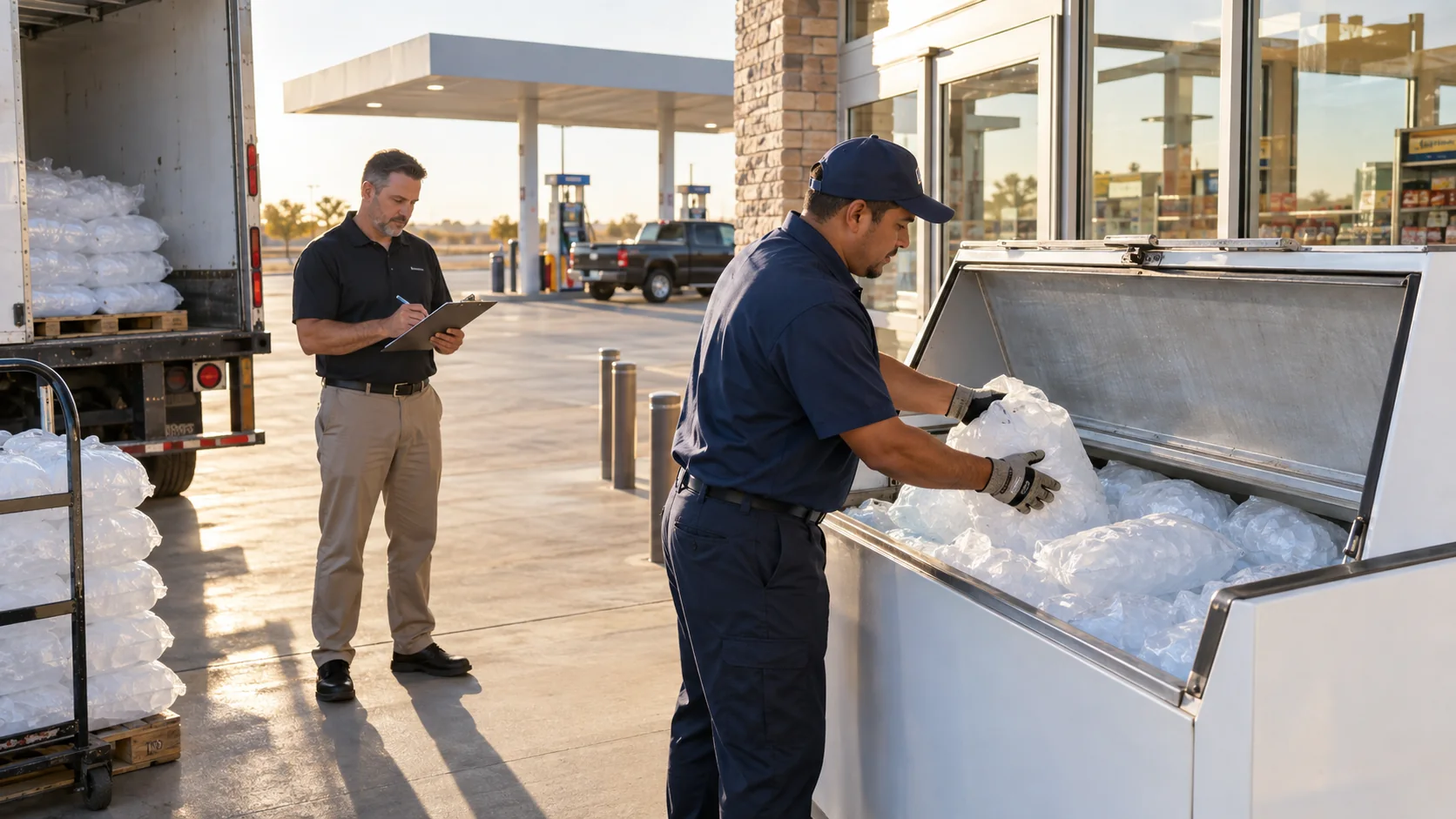
Wholesale Bagged Ice for Convenience Stores and Gas Stations
Bagged ice is a small-footprint product that can bring repeat traffic into a convenience store, gas station, liquor store, campground, or neighborhood market. It is also highly seasonal. A location that moves a manageable number of bags during winter can empty its merchandiser during a hot Friday afternoon, holiday weekend, or local event.
A reliable wholesale program is not just a freezer and a delivery truck. It combines visible placement, enough peak capacity, a clear reorder point, and a route schedule that changes with demand.
Start With Peak Demand, Not the Winter Average
Review at least four weeks of sales or bag counts and separate weekdays, weekends, holidays, and event days. If historical data is unavailable, record opening inventory, delivery quantity, and closing inventory every day for two weeks. The goal is to learn three numbers:
- Normal daily movement: bags sold on an ordinary weekday
- Peak daily movement: bags sold on the busiest repeatable day
- Delivery lead time: how long the location must operate before its next planned restock
Set the reorder point from peak movement multiplied by the days until the next delivery, then add reserve stock. This prevents an average from hiding the Saturday or holiday demand that causes most stockouts.
Put the Merchandiser Where Customers Can See It
For retail sales, visibility matters. Place the merchandiser near the entrance, checkout path, fuel canopy route, or another well-lit location customers already pass. The surface should be level, the electrical connection suitable for the equipment, and the door easy to open without blocking pedestrians or accessible routes.
Do not place the unit where delivery access requires moving vehicles, merchandise, or outdoor displays every time. A clean path from truck to merchandiser makes restocking faster and safer.
Match Capacity to Delivery Frequency
A larger unit creates more buffer, but capacity alone does not solve an inconsistent route. The right setup balances available space, bags moved per day, summer peaks, and how often a driver can service the store.
Our guide to choosing an ice merchandiser size explains common capacity ranges. Stores with limited space may benefit from more frequent deliveries, while remote locations often need more reserve capacity between routes.
Use a Simple Receiving Routine
- Assign a manager or shift lead who can receive the delivery.
- Count bags before and after restocking.
- Rotate older inventory forward rather than burying it.
- Remove damaged bags and report equipment temperature concerns.
- Keep the door fully closed and the area around the unit clean.
- Record unusual demand caused by weather, road traffic, or events.
A one-minute receiving log gives the supplier and store manager useful information when adjusting the route.
Prepare for Weekends, Holidays, and Heat Waves
Memorial Day, Independence Day, Labor Day, school events, rodeos, tournaments, and sustained heat can all change demand. Review the forecast and local calendar before the regular order cutoff. When a high-demand period is approaching, increase inventory early rather than waiting until the merchandiser is nearly empty.
A scheduled route should handle predictable demand. Keep the supplier's number available for unexpected surges, but do not build the everyday inventory plan around emergency calls.
Set Up Wholesale Ice Delivery
Fastlane Ice supplies bagged ice and rents ice merchandisers to businesses across the Permian Basin, West Texas, and Southeast New Mexico. We can coordinate routine restocking with the location's access and demand pattern.
Request a retail ice delivery plan with your city, available merchandiser space, preferred delivery days, and estimated bag movement.