





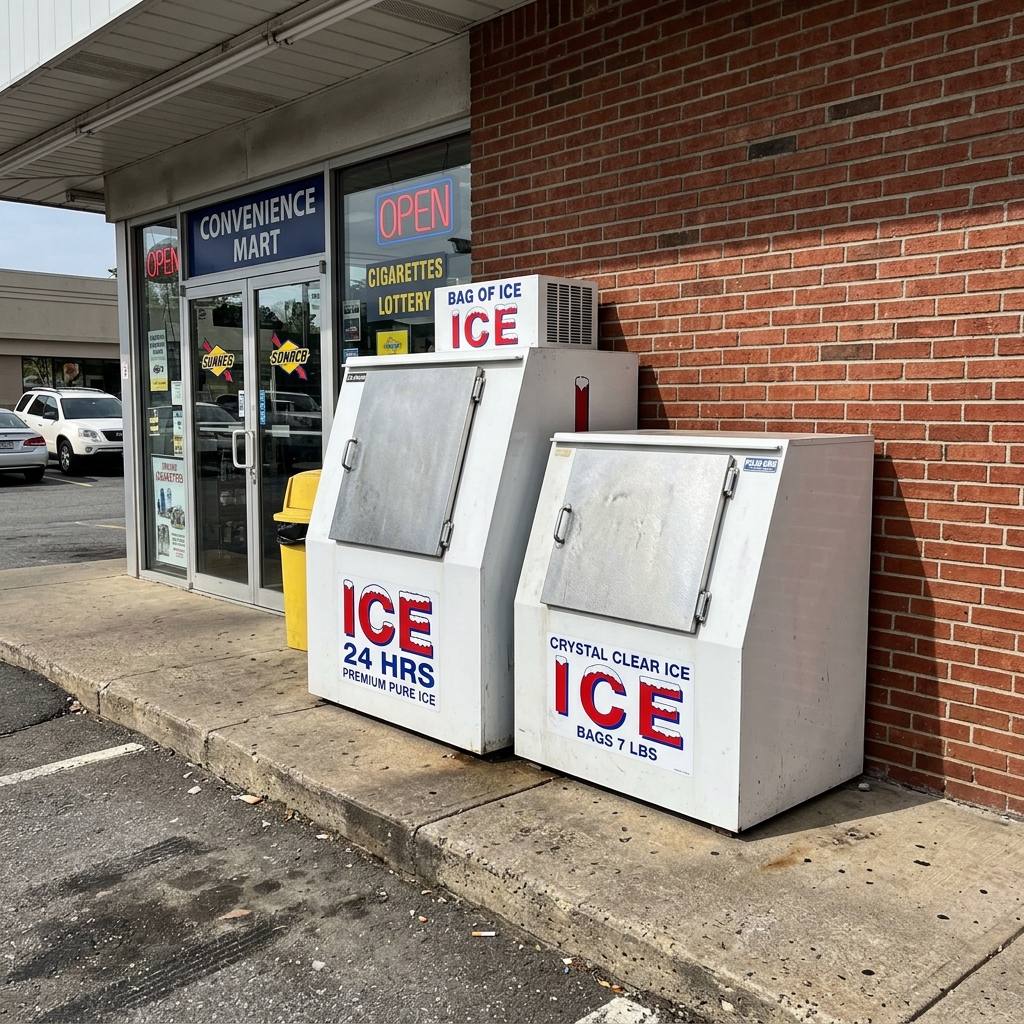
How to Choose the Right Ice Merchandiser Size for Your Business
If you're considering an ice merchandiser rental for your business, one of the first questions you'll face is: what size do I need? Too small, and you'll run out of ice during peak hours. Too large, and you're paying for capacity you don't use while taking up valuable floor or outdoor space.
This guide will help you figure out exactly which ice merchandiser size is right for your business, whether you're running a convenience store, managing an event, or stocking a worksite.
Understanding Ice Merchandiser Sizes
Ice merchandisers are measured primarily by their ice bag capacity — how many bags of ice (typically 7 lb, 10 lb, or 20 lb bags) the unit can hold at once. Here's a general breakdown of the most common sizes:
- Small (40-60 bag capacity) — Compact units ideal for low-traffic locations, small convenience stores, or supplementary use alongside an existing ice supply. These units have a small footprint and can fit in tight spaces like entrance areas or narrow sidewalks.
- Medium (75-100 bag capacity) — The most popular size for single-location businesses. Suitable for convenience stores, gas stations, liquor stores, and small event setups. Offers a good balance between capacity and space requirements.
- Large (120-200+ bag capacity) — High-volume units designed for busy retail locations, large events, festivals, and commercial operations. These are the workhorses — built for environments where ice demand is consistently high and restocking trips need to be minimized.
Factors to Consider When Choosing a Size
Picking the right size isn't just about matching a number — it's about understanding your specific business dynamics. Here are the key factors:
1. Daily Ice Volume
How many bags of ice do you sell or use per day? This is the single most important factor. Track your ice consumption over a typical week — including weekends, which are usually higher for retail locations. As a rule of thumb:
- Under 30 bags/day → Small merchandiser
- 30-75 bags/day → Medium merchandiser
- 75+ bags/day → Large merchandiser (or multiple units)
2. Restocking Frequency
How often can you realistically restock the unit? If you're getting ice delivered daily, a smaller unit may work because it'll be refilled every morning. If you only get delivery twice a week, you need a larger unit that can hold enough inventory between deliveries. Think of the merchandiser as a buffer between deliveries — the less frequently you restock, the bigger the buffer needs to be.
3. Location and Space
Where will the merchandiser be placed? Measure your available space before committing to a size. Consider:
- Indoor vs. outdoor placement — Outdoor units need to withstand weather and direct sunlight, which can affect energy consumption. Indoor units have more consistent performance.
- Electrical access — Every merchandiser needs a standard electrical outlet. Ensure your intended location has one nearby.
- Customer accessibility — The unit needs to be visible, easy to reach, and not blocking foot traffic or doorways.
- ADA compliance — If placed in a public-facing location, ensure the unit doesn't obstruct accessible pathways.
4. Seasonality
Ice demand is highly seasonal in the Permian Basin. A convenience store that sells 20 bags a day in January might sell 80+ bags a day in July. Consider your peak-season demand when selecting a size — it's better to have extra capacity during summer than to constantly run out. Some of our clients rent a larger unit for the summer months and scale down in the off-season.
5. Business Type
Different businesses have different ice merchandiser needs:
- Convenience stores and gas stations — Typically need a medium to large unit, positioned near the entrance or by the checkout. Ice is an impulse buy — visibility drives sales.
- Liquor stores — Medium units are usually sufficient. Customers buying alcohol frequently grab a bag of ice, so placement near the register or door is key.
- Restaurants and bars — Often use merchandisers as overflow capacity for their kitchen ice machines. A small to medium unit in the back of house works well.
- Events and festivals — Go large. Events burn through ice fast, and you don't want to be the vendor who ran out. For multi-day events, consider multiple large units.
- Worksites and construction sites — A medium unit combined with regular ice delivery keeps crews cool without taking up too much space in the staging area.
Renting vs. Buying
For most businesses, renting an ice merchandiser makes more financial sense than purchasing one outright. Here's why:
- No upfront capital expense — Commercial ice merchandisers can cost $2,000-$5,000+ to purchase. Renting eliminates that barrier.
- Maintenance included — If the unit breaks down, it's our problem, not yours. We'll replace or repair it promptly.
- Flexibility to scale — Need a bigger unit for summer? Want to add a second location? Scaling is easy with rentals.
- No depreciation — Commercial equipment loses value fast. Renting keeps it off your balance sheet.
Let Fastlane Ice Help You Choose
Still not sure which size is right for you? That's what we're here for. Contact Fastlane Ice and tell us about your business — your location, your typical daily ice volume, your peak-season expectations, and where you'd like to place the unit. We'll recommend the perfect merchandiser size and set up a rental plan that keeps your ice supply running smoothly.
We deliver and install the merchandiser, provide regular ice restocking, and handle all maintenance. One call, and your ice game is handled. Call us at (432) 288-4407 to get started.
â€