





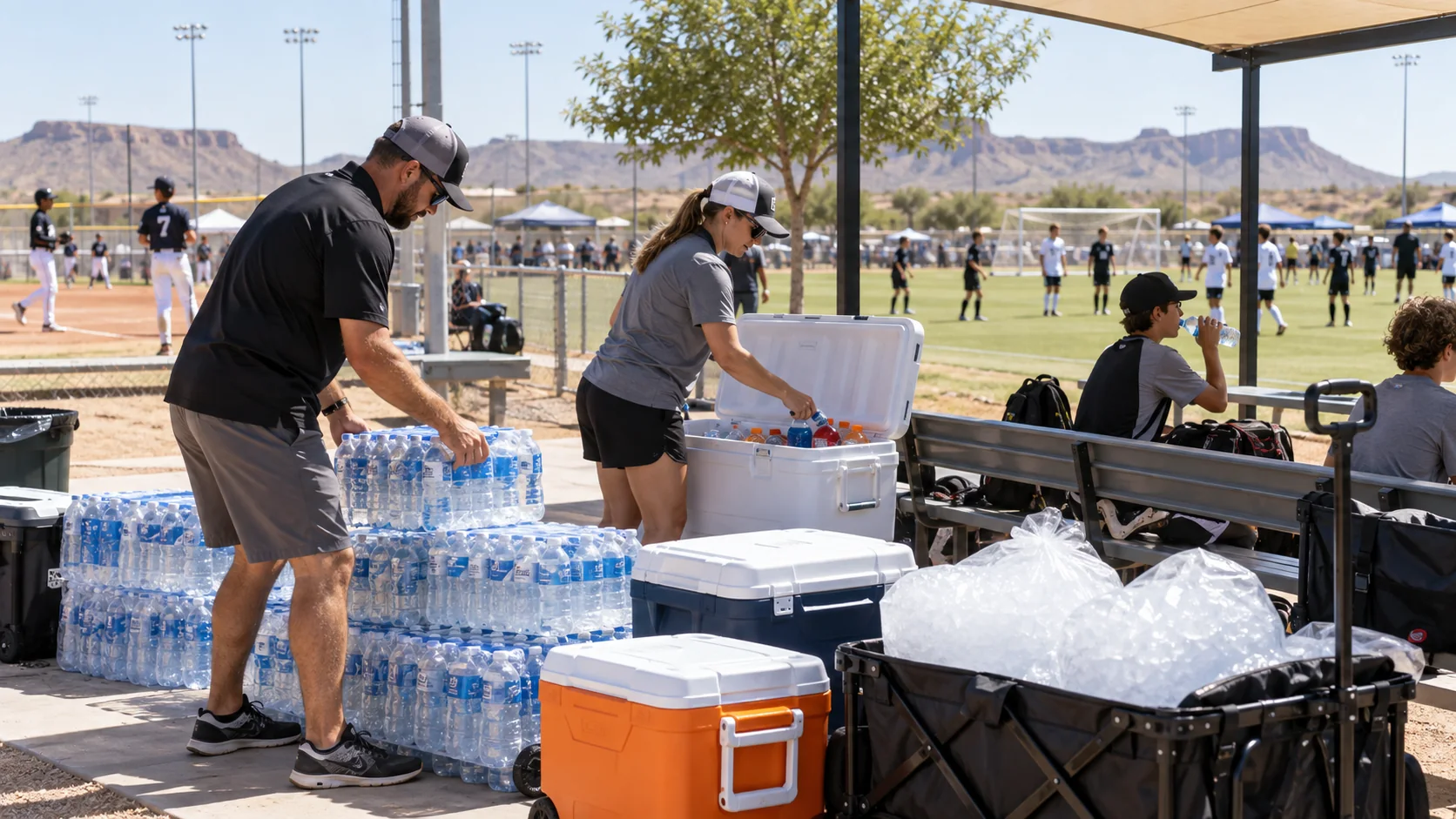
How Much Ice and Water Does a Sports Tournament Need?
A tournament is not the same as a four-hour party. Athletes rotate between active play and rest, teams arrive at different times, fields may be far apart, and athletic staff need ice for cooling and first-aid support in addition to concessions. Planning by total attendance alone usually produces the wrong number.
A better tournament plan uses athlete-hours, field locations, service points, event duration, and weather.
Step 1: Calculate Athlete-Hours
Multiply the number of athletes present during a time block by their hours of active participation and warm-up. Do not multiply every registered athlete by the full gate-open time if teams arrive and leave in waves.
For water availability during hot activity, a practical starting point is 24–32 ounces per athlete-hour, consistent with frequent small drinks. Adjust for sport, exertion, age, weather, and the event's medical plan. Coaches and athletic trainers should oversee individual hydration decisions.
Example: 120 athletes averaging three active hours equals 360 athlete-hours. At 24 ounces per athlete-hour, that is 8,640 ounces, or approximately 512 bottles of 16.9 ounces—about 22 cases of 24. Add reserve inventory and separate supplies for staff and officials.
Step 2: Separate Water Into Four Uses
- Team benches: bottled water or clean dispensers available where athletes rest
- Officials and staff: a separate count so their supply is not taken from teams
- Spectators and volunteers: sales or complimentary stations planned from expected attendance
- Emergency reserve: sealed cases controlled by event operations
Place supplies close enough that teams do not cross parking lots or active fields for a refill. For large complexes, stage each field cluster rather than creating one central pile.
Step 3: Calculate Ice by Function
Keep the ice estimate in separate buckets:
- Cooling drinking water: ice for team and staff coolers
- Medical and rapid cooling: ice controlled by qualified event or athletic personnel
- Concessions: beverage-service ice and ice used to chill sealed products
- Reserve: replacement for melting and delayed restocking
As an operational starting point, many organizers stage 1–2 pounds of bagged ice per athlete for a hot full-day event, then add concessions and medical stock separately. Conditions vary significantly, so review use after the first tournament block and adjust the next delivery.
Step 4: Count Coolers and Storage Locations
List every team bench, officials' area, athletic-trainer station, concession stand, volunteer tent, and refill point. A correct total quantity can still fail if there are too few coolers or if half the ice melts while waiting in the sun.
For a large or multi-day tournament, an on-site ice merchandiser rental provides a central frozen reserve. Field staff can restock smaller coolers without repeated store trips.
Step 5: Build the Delivery Timeline
Schedule the first delivery before team check-in, with a named contact and a clear unloading location. For multi-day events, record remaining water and ice at the end of each competition block. Reorder before the next morning rather than waiting for the first games to start.
Weather, overtime games, schedule delays, and extra spectators can all raise demand. Keep a 15–25% reserve where the event manager can release it as needed.
Plan Tournament Delivery With Fastlane Ice
Fastlane Ice delivers bagged ice, bottled water, Gatorade, Sqwincher, and rental merchandisers for tournaments and outdoor events across West Texas and Southeast New Mexico.
Request a tournament delivery plan with athlete count, fields, schedule, event address, and the number of days. For parties, weddings, and general gatherings, use our separate event ice calculator.